
Burke County Criminal Court Records
A criminal court record is the case-level record kept after charges are filed and the court opens a matter. In Burke County, that record may begin in District Court for misdemeanors, infractions, first appearances, and many early proceedings. Felony cases and appeals from District Court convictions move through Superior Court. The District Attorney prosecutes criminal cases and infractions for the State.
The full case file is broader than the charge list. It can include the charging document, bond, arraignment, attorney information, motions, hearing dates, orders, plea, verdict, disposition, sentence, probation, restitution, costs, and appeal entries. For a closer look at the charge layer after an arrest, use the Burke County arrest records and court charge pathway in court charge records.
Search Burke County Criminal Court Records
The online starting point is the North Carolina eCourts Portal. Use Smart Search for the criminal case summary and register of actions. Search by defendant name or case number, then use filters for location, case type, case status, and filing date range. Use Search Hearings when the immediate need is a court date, courtroom, judicial officer, or hearing time.
- Open the eCourts Portal and choose Smart Search.
- Search by defendant name or case number. Wildcard rules can help when the spelling or full number is unknown.
- Narrow the result to Burke County and the criminal case type where available.
- Open the matching case and review the docket, charge list, hearing events, disposition, and financial fields.
- Contact the Clerk of Superior Court for certified copies, older paper files, or records not visible online.
For courthouse research, public terminals in clerk offices can search criminal cases by defendant name, case number, victim, or witness. The Clerk of Superior Court at the Burke County Courthouse is also the route for certified copies and name-based criminal background check processes described by the NC Judicial Branch.
Burke County Criminal Case Flow
Criminal court records change as the case moves. A case may begin with a warrant, criminal summons, citation, complaint, information, or indictment. Some cases end quickly by dismissal, waiver, plea, or compliance. Others move through motions, trial, sentence, and appeal. The docket provides the timeline, while the case file holds the documents and orders.
Case flow: Charges Filed › Arraignment › Pretrial / Motions › Plea or Trial › Disposition › Sentencing
| Stage | What Happens |
|---|---|
| Charges filed | The accusation enters court through a warrant, summons, citation, information, or indictment. |
| Arraignment | The charge is formally addressed and a plea may be entered. |
| Pretrial / motions | Attorneys raise issues about evidence, procedure, bond, discovery, or trial readiness. |
| Plea or trial | The case is resolved by plea, bench trial, jury trial, dismissal, or another court action. |
| Disposition | The court records the outcome of each charge or the case as a whole. |
| Sentencing | The record may show probation, confinement, restitution, fines, costs, or other conditions. |
What Burke County Criminal Records Show
A Burke County criminal court record can contain several layers. The charge is only the starting point. The docket shows court events. The disposition shows the result. The judgment or sentence shows what the court ordered after a plea or finding. Financial fields may show court costs, fines, restitution, attorney fees, and payment status.
| Field | What It Shows |
|---|---|
| Case number | The eCourts case identifier, including year, case type letters, sequence, and county identifier. |
| Defendant | The person charged in the criminal case. |
| Charges | Offense name, statute, class, offense date, arrest or citation number, and charge status. |
| Bond | Release conditions, secured or unsecured bond, or custody-related entries when public. |
| Hearings | Court dates, courtrooms, hearing types, judicial officer, and time. |
| Plea | Guilty, not guilty, responsible, not responsible, or other plea entry where applicable. |
| Disposition | Dismissed, guilty, not guilty, prayer for judgment, judgment entered, or another outcome. |
| Sentence | Probation, jail or prison, fines, restitution, costs, or other ordered conditions. |
Burke Criminal Court Sources
The NC Judicial Branch expunction help topic explains the process for removing eligible criminal records from public access.
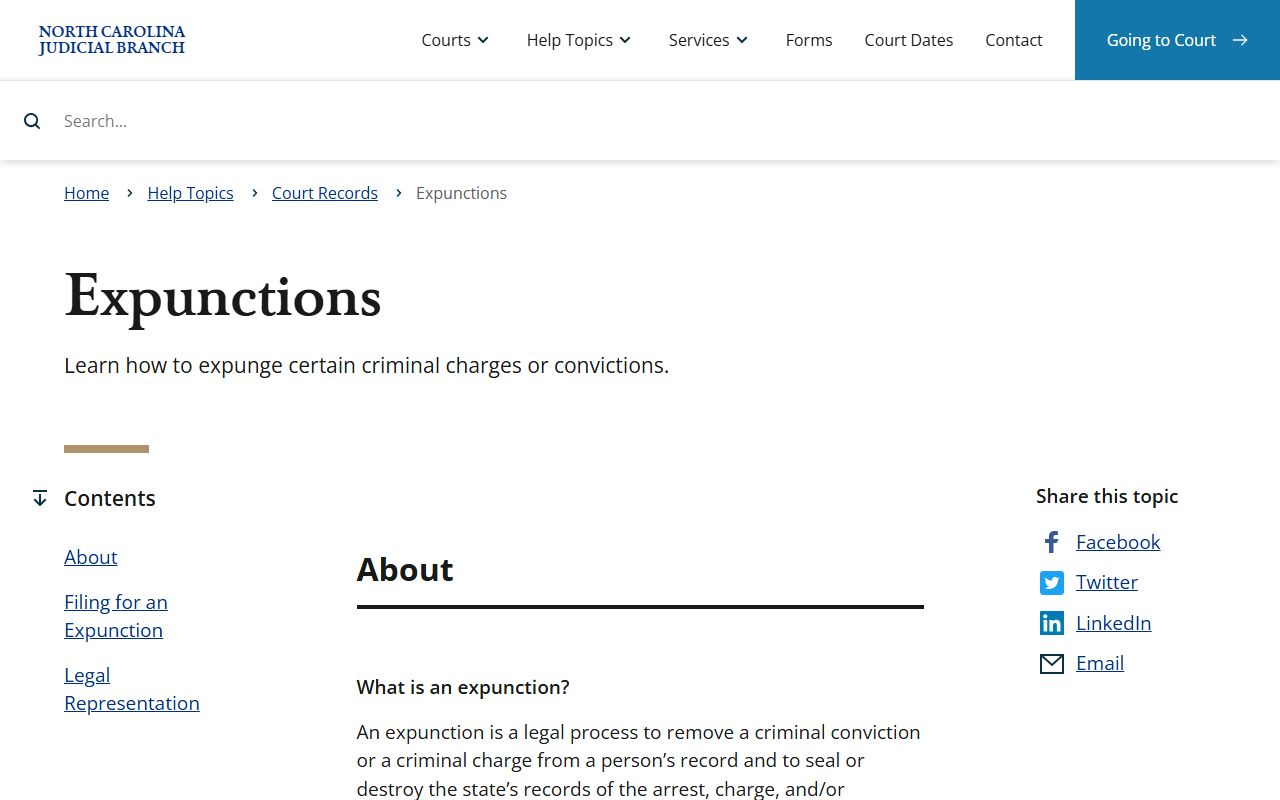
Expunction affects public record visibility but depends on the case outcome, offense, waiting period, and statute.
The North Carolina criminal cases help topic gives state-level context for prosecutions and criminal court process.
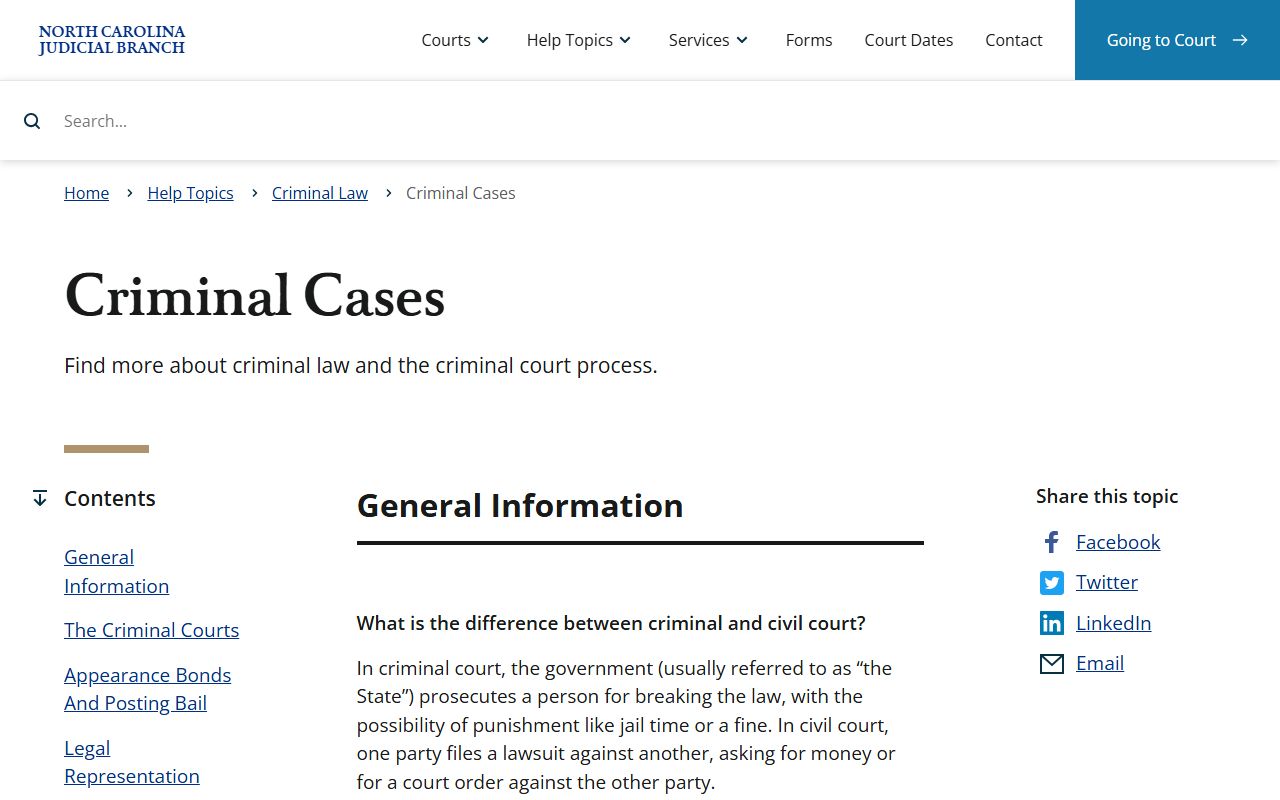
That source supports the distinction between a criminal case file and a law-enforcement report.
Charges vs Convictions
A Burke County criminal court record can show charges that never become convictions. A charge is an accusation filed into court. A conviction is a legal outcome based on a guilty plea, responsible finding, guilty verdict, or other qualifying judgment. Dismissed, reduced, amended, or not-guilty charges may remain visible unless sealed or expunged.
| Point | Charge | Conviction |
|---|---|---|
| Meaning | An accusation filed by criminal process or prosecutor action. | A court outcome after plea, verdict, or judgment. |
| Timing | Appears early in the case. | Appears after the court resolves the charge. |
| Record effect | May be pending, amended, dismissed, or tried. | May lead to sentence, costs, probation, or collateral effects. |
| Public access | Often public unless restricted, sealed, juvenile, or expunged. | Often public unless restricted, sealed, juvenile, or expunged. |
Burke County Criminal Case Offices
Prosecutorial District 36 is led by District Attorney Scott Reilly. Official DA sources list the Burke office at the Burke County Courthouse, 201 South Green Street, Morganton, NC 28655, phone (828) 433-3210, fax (828) 433-3211. Published office hours are Monday-Friday except court holidays, 8:00 AM to 5:00 PM, with front-window hours 9:00 AM to 3:00 PM.
The Prosecutorial District 36 listing identifies the district attorney for Burke, Caldwell, and Catawba under currently published sources.
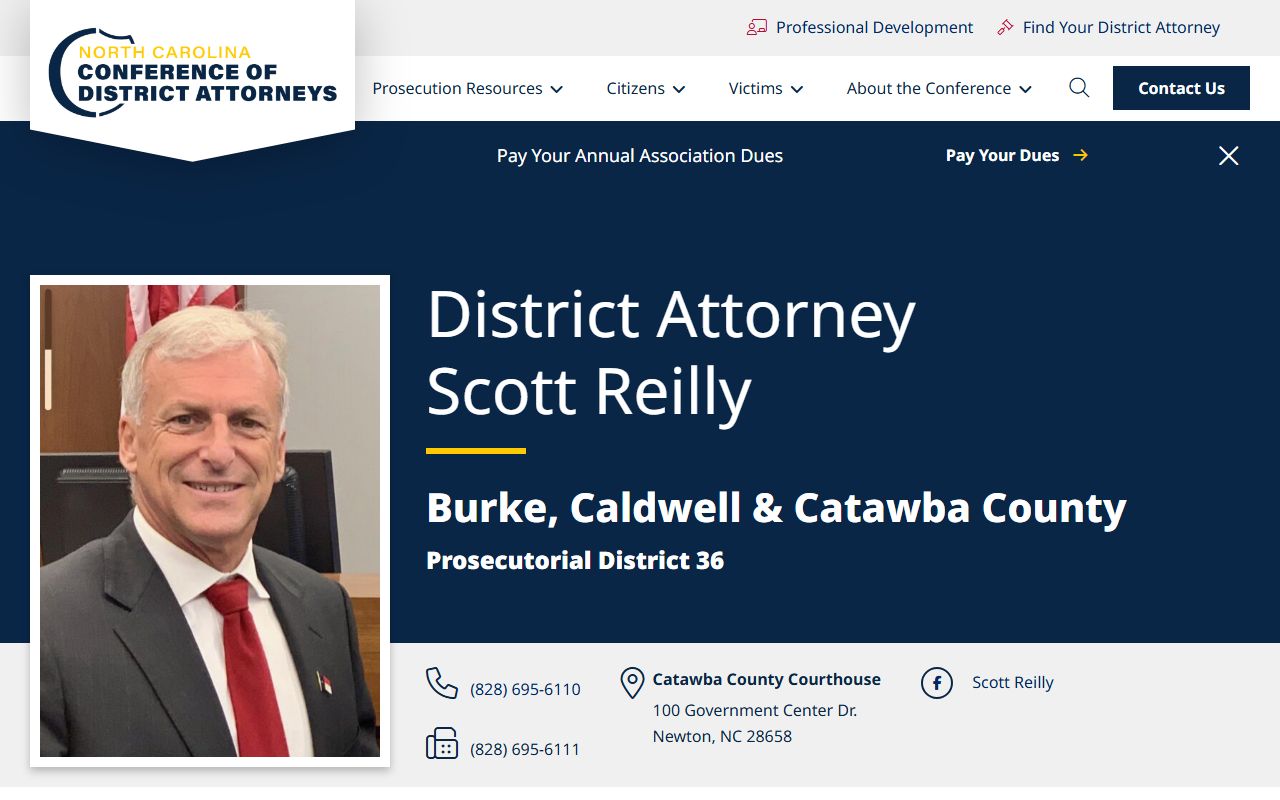
The prosecutor's office is a case participant, while the Clerk of Superior Court remains the record custodian for court case files.
The District Attorney Burke office and news page provides local office and case update context for Burke County criminal matters.
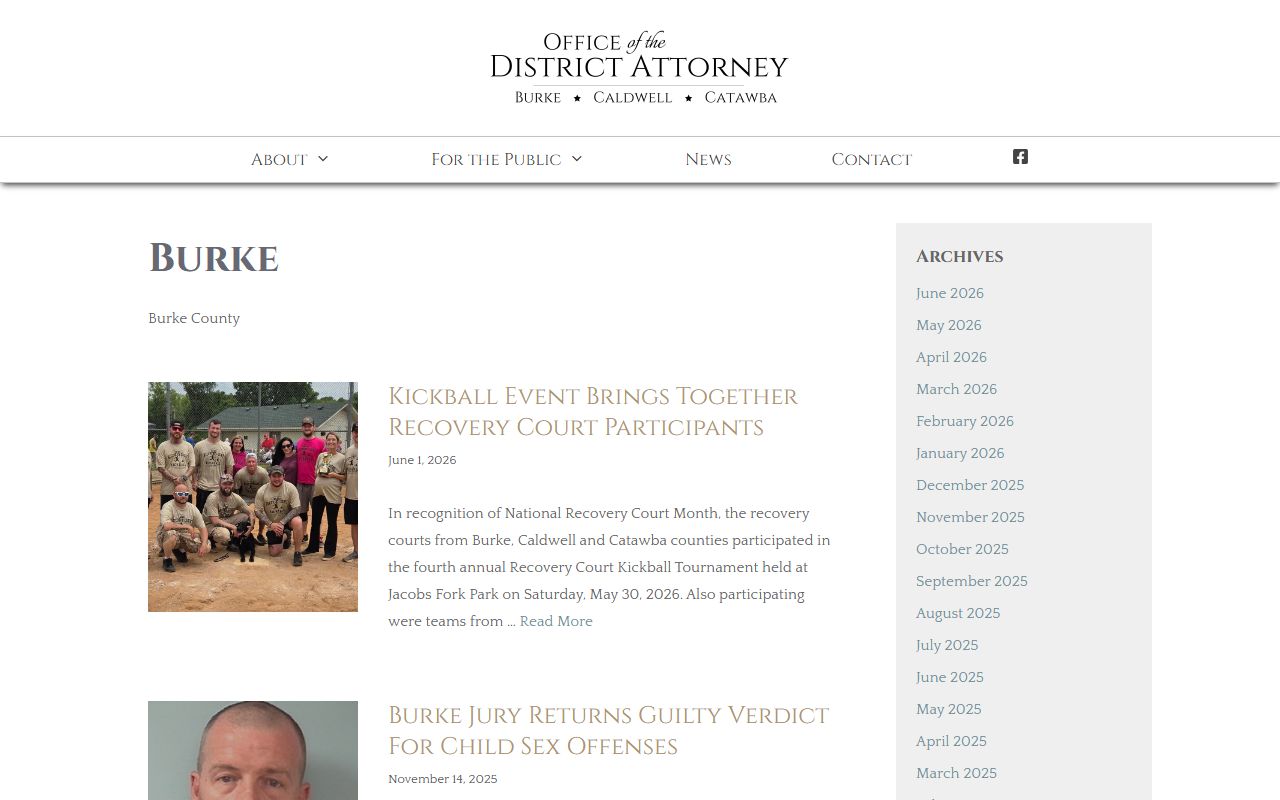
Local DA information can help explain court settings, traffic windows, and prosecution contact limits.
Sealed vs Expunged Records
Sealed and expunged records are not the same. A sealed record is hidden from public view by law or court order, but the record may still exist for limited authorized access. An expunged record is cleared from public record under a statute and court order. The legal effect depends on the statute and the agency processing the order.
| Point | Sealed | Expunged |
|---|---|---|
| Public view | Hidden or restricted from ordinary public access. | Cleared from public record when the order is processed. |
| Source | Law, rule, or court order. | Chapter 15A expunction statute and court order. |
| Examples | Juvenile, mental health, adoption, protected data, or sealed filings. | Eligible dismissed charges, not-guilty results, or certain nonviolent convictions. |
| Burke process | Ask the clerk about access rules or court-order procedure. | File eligible petitions in the court where the case occurred. |
The expunction statute for certain nonviolent convictions is N.C.G.S. 15A-145.5.
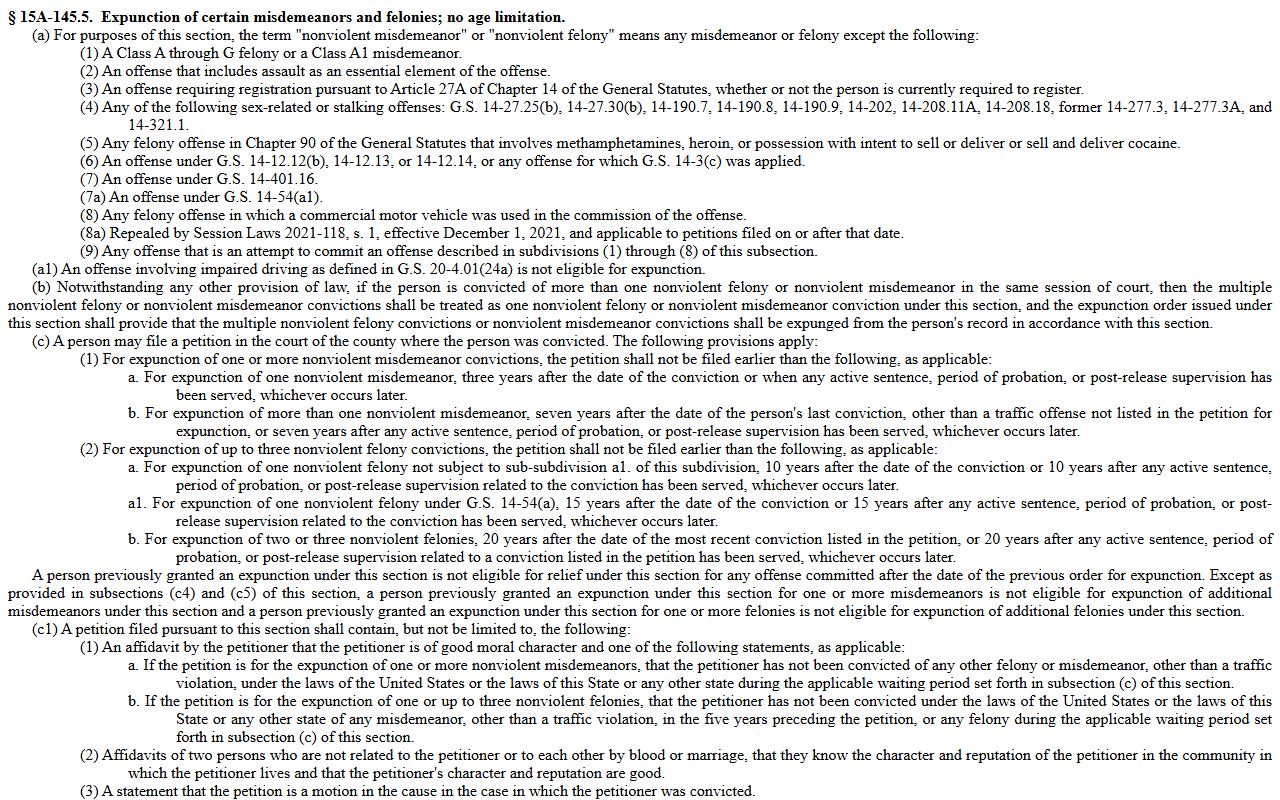
Eligibility is not automatic and can depend on offense type, prior record, age, sentence completion, and waiting period.
The expunction statute for dismissed charges and not-guilty findings is N.C.G.S. 15A-146.
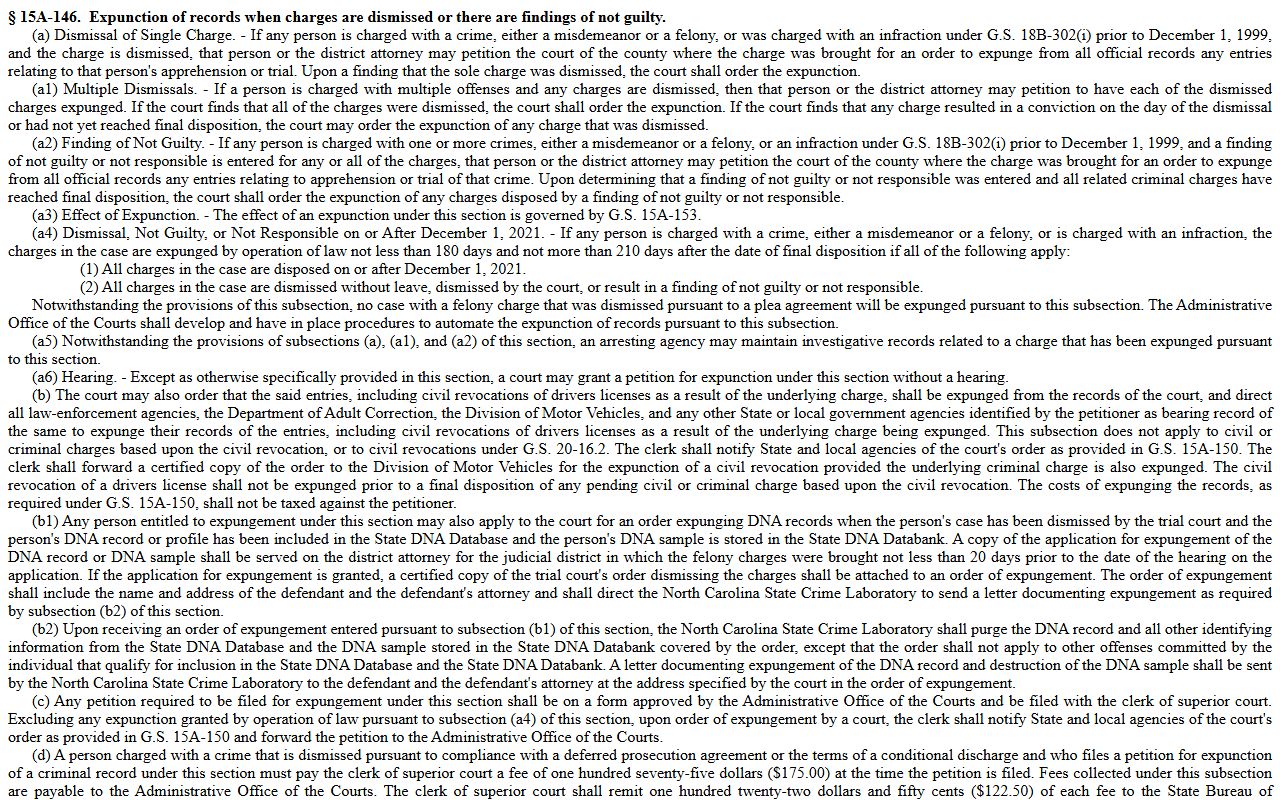
Dismissed and not-guilty records use a different path than conviction expunctions.
Access Burke Criminal Court Records
N.C.G.S. 7A-109 is the core court-record access rule because it covers clerk-maintained records, dockets, files, and indexes. Adult criminal case records are often public, but public access does not include juvenile records, expunged matters, sealed filings, mental health records, protected identifiers, or non-public documents. Law-enforcement investigative records are controlled by N.C.G.S. 132-1.4 and should not be treated as the same thing as a court case file.
Burke County criminal court records may also show court costs. N.C.G.S. 7A-304 sets criminal court costs and includes failure-to-appear fee rules. Costs, fines, restitution, and probation-related obligations may appear in the financial part of the case record when public.
Note: A public criminal case search is not a substitute for a certified clerk record or a legally compliant background check.