
How to Search Burke County Court Records
Burke County Court records are searched first through the statewide North Carolina eCourts Portal. The Portal is the official online path for public case information, hearing searches, judgment indexes, and eligible payments. Burke County does not have a separate county-only court case database in the research sources, so location filters and case-type filters matter. For current public files, Smart Search is the broadest starting point. For a court date, use Search Hearings. For a judgment index entry, use NC Judgment Search, then return to Smart Search for a fuller case summary.
The NC Judicial Branch Burke County page is the local entry point for courthouse links, jury service, payment information, family court, local rules, and contact pages. The Portal training page explains wildcard rules, case-number format, hearing search fields, and elevated-access limits. Public users can search many open case records for free, but restricted case types and non-public documents are not shown to ordinary public users.
- Open the eCourts Portal and choose Smart Search for a case summary or register of actions.
- Enter a case number, party name, business name, or partial wildcard search.
- Use Advanced Filtering Options to narrow the search to Burke County, case type, status, date range, or party details.
- Use Search Hearings when the goal is a court date, courtroom, hearing time, or judicial officer.
- Call or visit the Clerk of Superior Court when a certified copy, older paper file, or public terminal search is needed.
The North Carolina eCourts Portal is shown in this Burke County Court records search image.
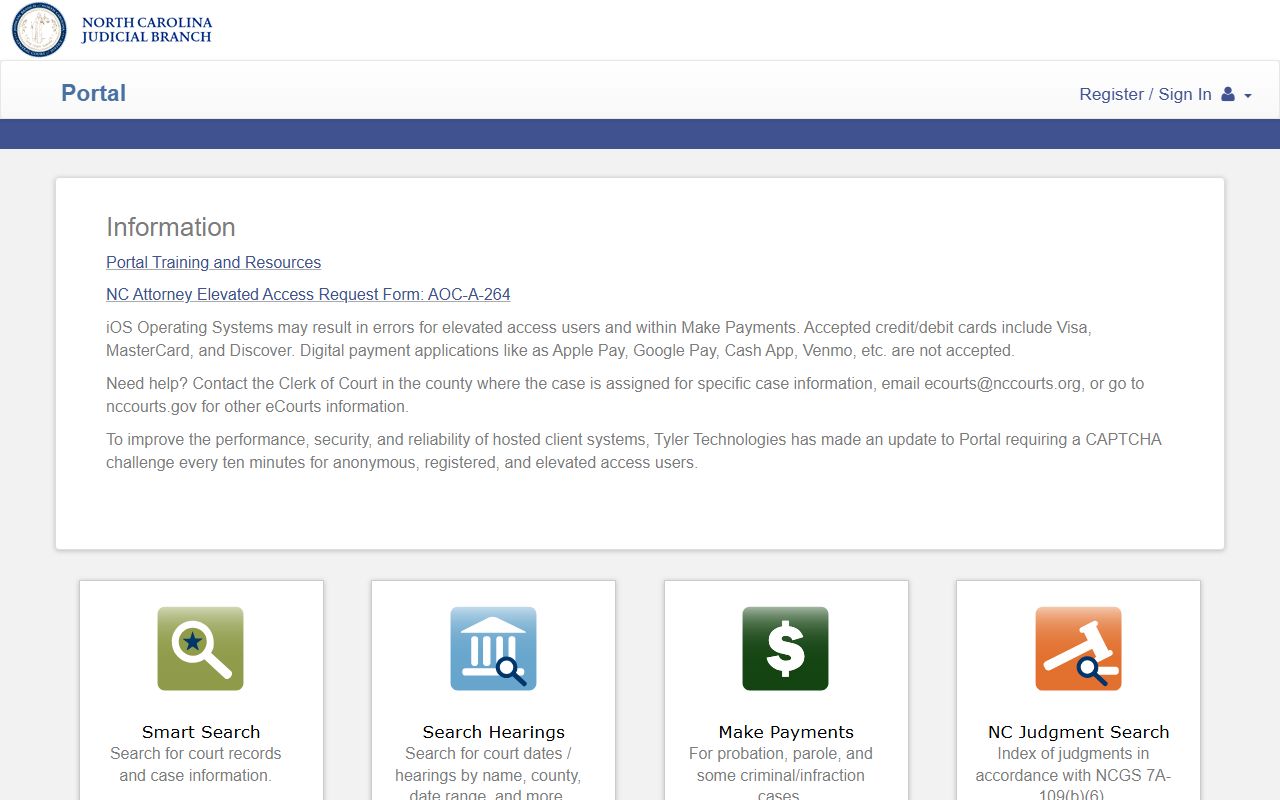
The statewide Portal is central for online access, but courthouse terminals and paper files still matter when the record is older, certified, or not fully public online.
Burke County Court Search Fields
Portal searches work best when the user starts with the most precise field available. Case numbers use the North Carolina Enterprise Justice format with a two-digit year, case type letters, a six-digit sequence, and a county identifier. The research file notes the NCAOC example 21CR000003-910. Traffic users should pay close attention to the case letters because CR means at least one criminal offense and IF means an infraction-only matter.
| Field | Use | Burke County Notes |
|---|---|---|
| Smart Search | Case number or party name | Use for public case summaries and register of actions entries. |
| Location | County or courthouse filter | Select Burke County when the Portal exposes a location filter. |
| Party name | Person or business search | Wildcard rules allow partial names with the minimum character counts stated by NCAOC. |
| Case type | Civil, criminal, estates, special proceedings | Use this filter to separate court records from probate, traffic, or civil files. |
| Search Hearings | Court dates and rooms | Search by case number, party, attorney, judicial officer, or courtroom. |
| NC Judgment Search | Judgment index | Results may show case number, disposition status, index date, parties, and comments. |
Note: Court case records are obtained through Portal, public terminals, and the clerk, not through a county general records office.
Inside Burke County Court Structure
Burke County is part of the North Carolina General Court of Justice. The local trial structure is not a county-run court system. It is a state court system with Superior Court and District Court divisions sitting in the county. Burke County is listed by the NC Judicial Branch in Prosecutorial District 36, Superior Court District 36, and District Court District 36. The Clerk of Superior Court is the central court clerk and also handles probate functions as ex officio judge of probate.
North Carolina's court structure overview explains the statewide divisions that shape Burke County Court records.
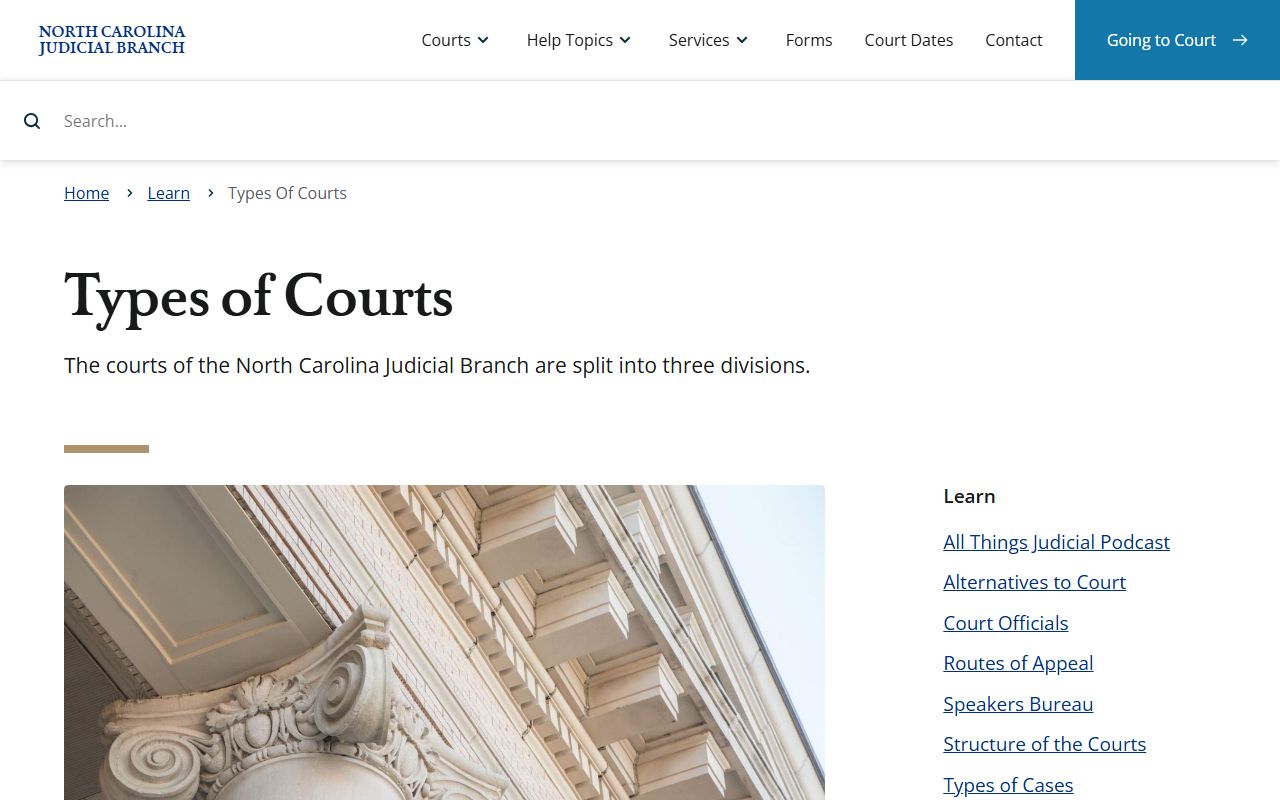
The same structure controls where a person searches, pays, appeals, or requests a certified record in Burke County.
| Court or office | Role in Burke County | Local contact |
|---|---|---|
| Superior Court | Felonies, civil cases above the District Court threshold, and appeals from District Court. | Superior Court Judges: (828) 433-3216 |
| District Court | Misdemeanors, infractions, traffic, juvenile, family, small claims appeals, and lower-value civil cases. | District Court Judges: (828) 695-6215 |
| Clerk of Superior Court | Case files, public terminals, filings, copies, estates, special proceedings, and probate work. | (828) 433-3200 |
| Magistrates | Initial appearances, criminal process, small claims-related duties, and other statutory duties. | (828) 433-3219 |
| Court of Appeals | Intermediate appellate review by panels of three judges. | State-level appellate court |
Burke County Courthouse Contacts
The active courthouse for Burke County Court records is the Burke County Courthouse in downtown Morganton. It is the local destination for Superior Court, District Court, the Clerk of Superior Court, public terminals, certified copies, traffic payments if not handled online or by mail, jury service, local rules, and in-person clerk questions. Family Court, magistrate, juvenile, Guardian ad Litem, and District Attorney contacts are also tied to the county court contact directory.
The official courthouse page lists the Burke County Courthouse address, phone, and hours.
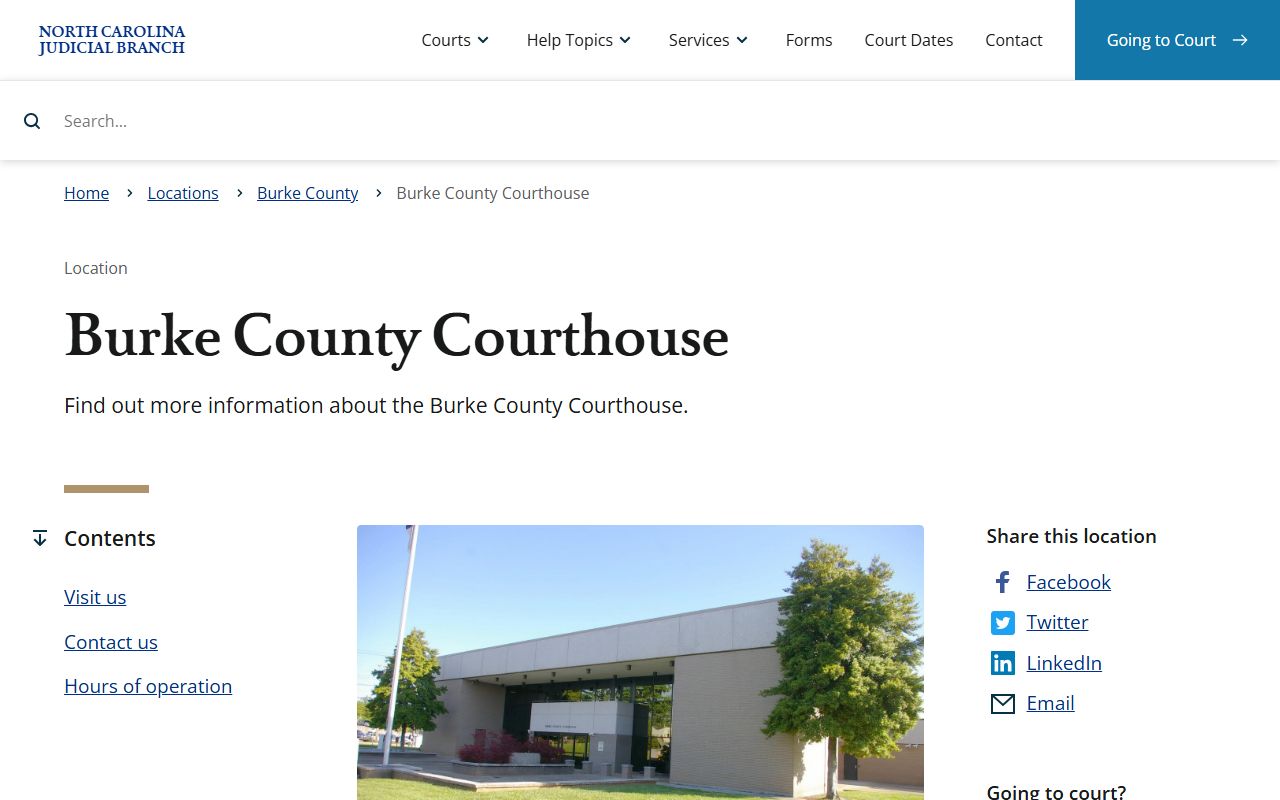
Those courthouse details should be checked before visiting because court sessions, payment counters, and clerk work can have different practical demands.
Burke County Courthouse
201 South Green St
Morganton, NC 28655
(828) 433-3200
Monday-Friday, 8:30 AM-5:00 PM
Clerk of Superior Court
PO Box 796
Morganton, NC 28655
(828) 433-3200
Case files, public terminals, copies, estates, and divorce judgments.
District Attorney
201 South Green Street
Morganton, NC 28655
(828) 433-3210
Front window hours for traffic matters are 9:00 AM-3:00 PM on regular business days.
Types of Burke County Court Records
Burke County Court records include criminal, civil, traffic, family, probate, estate, special proceeding, and judgment materials. Criminal records can begin with a citation, warrant, summons, or indictment and then grow into a full case file with pleas, hearings, motions, dispositions, sentence terms, costs, and probation details. Civil records may show complaints, summonses, motions, orders, judgments, executions, liens, and satisfaction entries.
Family and domestic records can include divorce, custody, child support, equitable distribution, alimony, and protective order filings. Divorce judgments come from the clerk in the county where the divorce was granted. Probate and estate filings route through the Clerk of Superior Court because the clerk acts as ex officio judge of probate. Real property, birth, death, and marriage certificates are not court case records; Burke County Register of Deeds handles those record categories.
- Criminal case files: charges, pleas, hearings, dispositions, sentences, probation, restitution, and appeal activity.
- Traffic cases: citations, CR or IF case numbers, court dates, waivers, dispositions, costs, and appeal status.
- Civil cases: complaints, answers, motions, orders, judgments, liens, and executions.
- Family cases: divorce, custody, support, equitable distribution, and related domestic orders.
- Estates and probate: wills, estate administration, letters, inventories, accountings, and guardianship filings.
What Burke County Court Records Show
A court record is not just a name search result. It is a case timeline with fields that identify the parties, the filing, the court division, the status, the events, and any judgment or disposition. In criminal and traffic cases, the same file may also show the charge, offense date, bond information, court date, plea, sentence, fine, cost, and appeal status. In estate files, the parties and events can instead involve a decedent, personal representative, heirs, inventory, and accounting entries.
| Field | What it means in Burke County Court records |
|---|---|
| Case number | The court's case identifier, often showing year, case type letters, sequence, and county identifier. |
| Party information | Names such as plaintiff, defendant, State, petitioner, respondent, decedent, guardian, or estate party. |
| Docket or register of actions | A chronological case timeline of filings, hearings, motions, orders, continuances, and judgment events. |
| Hearings | Court date, time, courtroom, location, hearing type, and judicial officer where available. |
| Disposition | The outcome of the charge, claim, petition, judgment, or case event. |
| Financial information | Costs, fines, restitution, attorney fees, probation fees, payments, balances, civil judgments, or liens. |
- Disposition
- The outcome of a charge, claim, or case.
- Docket
- The case schedule or event history.
- Judgment
- A court decision that can be enforced.
- Expunction
- A statutory process that removes eligible records from public view.
Burke County Criminal and Traffic Records
Criminal cases in Burke County are prosecuted by the District Attorney for Prosecutorial District 36. The full criminal case record is different from a booking record or a single charge listing. It can include the charging document, first appearance, bond entries, pleas, motions, hearing dates, orders, verdict or plea outcome, sentence, probation, restitution, fines, costs, and appeal activity. For deeper criminal case details, the Burke County criminal court records page focuses on the full court file.
Traffic records are usually District Court matters, and many routine citations can be searched or paid through official court channels if eligible. The Burke County payment information page lists mail, in-person, and online payment options.
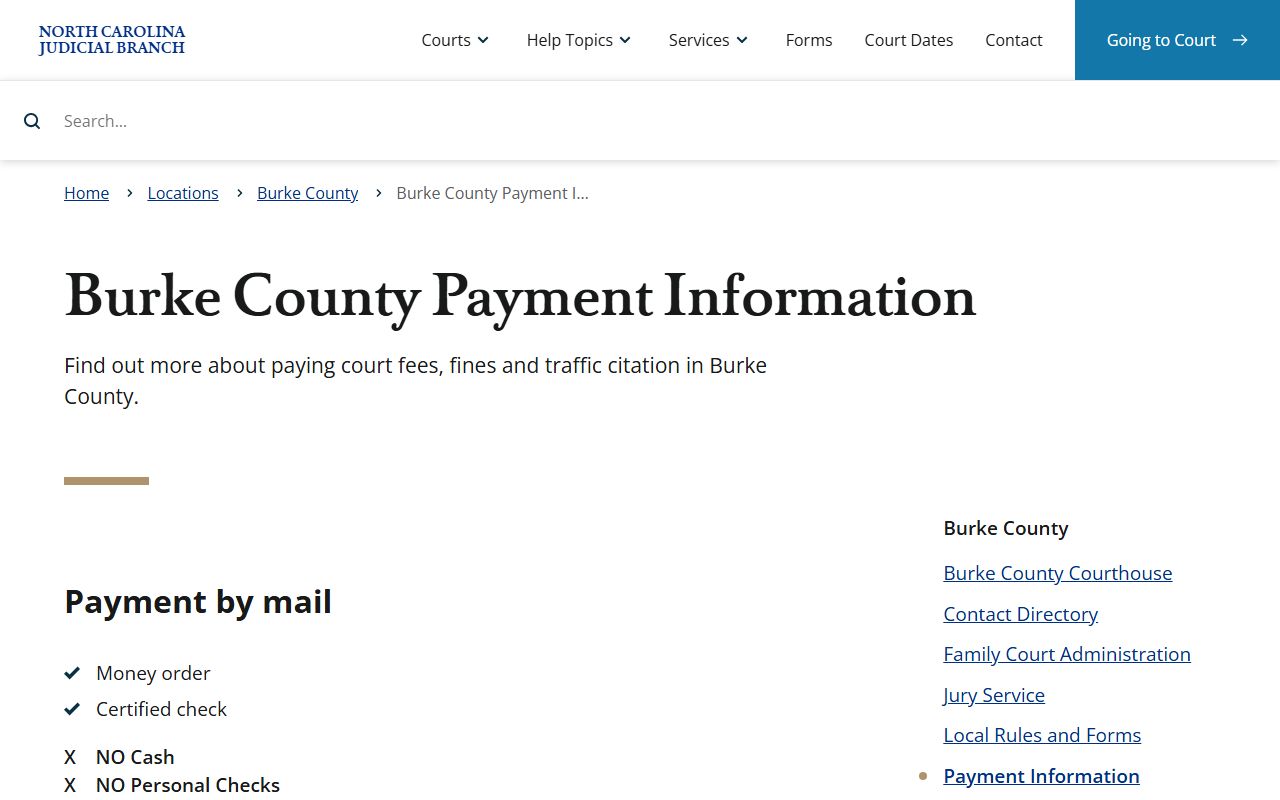
Payment access is separate from legal advice, charge negotiation, or a trial setting; those questions depend on the clerk, District Attorney, attorney, or judge.
| Payment method | Accepted | Limits noted in research |
|---|---|---|
| Money order or certified check | No cash or personal checks; include citation number when paying an eligible citation. | |
| In person | Cash, credit/debit card with processing fee, money order, certified check | No personal checks; pay at the courthouse cashier. |
| Online | Credit/debit card if eligible | Some payment types require full payment and not all cases qualify. |
Burke County Sheriff and Jail Records
The Burke County Sheriff's Office and jail records ecosystem is separate from the court file, but it often intersects with warrants, arrests, bond, and custody status. The Burke County Jail is on Government Drive in Morganton and is reached at 828-764-9590. The sheriff's official sources include a jail page, press releases, a Most Wanted page, and the Burke County Sheriff NC mobile app. The app listing names Submit A Tip, Handgun Permits, Jail Information, Inmate Search, news, and public safety information.
The Burke County Family Court Administration page is another local court resource for domestic cases that can overlap with custody, support, and protective order needs.
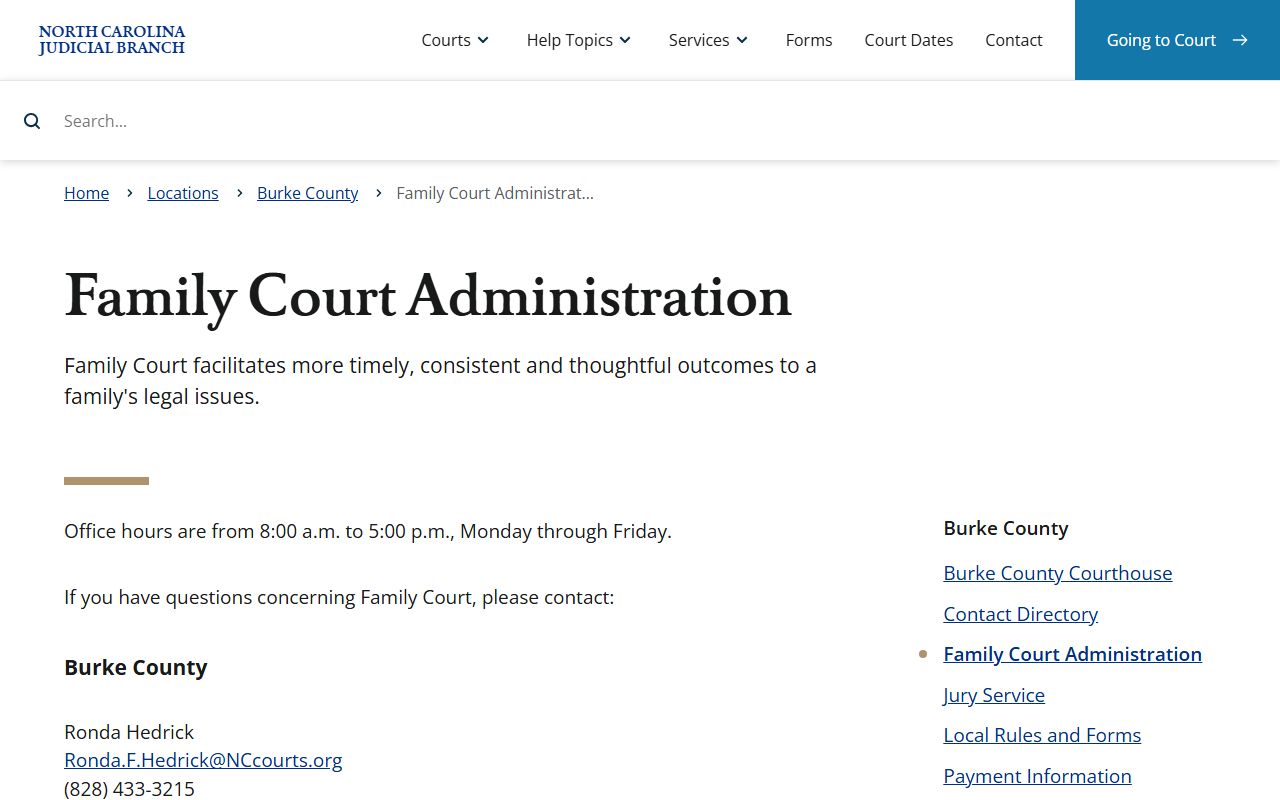
Family court contacts are part of the local court directory, while jail and warrant lookups remain sheriff or custody-notification channels.
For custody searches, use the Burke jail page, the sheriff app's inmate search feature, Morganton Police-to-Citizen inmate inquiry, NC DAC offender public information search for state offenders, and the federal Bureau of Prisons locator for federal custody. VINELink North Carolina can help with custody notifications, but it is not the court record itself.
Burke County Warrant Records
Burke County warrant research should begin with official local channels, not third-party warrant sites. The Sheriff's Office publishes a Most Wanted page, but the research file is clear that it is a selected public wanted list, not a complete active warrant database. The page asks people with information to contact the Sheriff's Office at (828) 438-5500 or burkesheriff@burkenc.org, and it also points to Morganton-Burke Crime Stoppers for anonymous tips.
For a missed court date, traffic failure to appear, or related criminal case, search the eCourts Portal and contact the Clerk of Superior Court or counsel. Magistrates may be involved with criminal process and first appearances, but a person should not assume a phone call clears a warrant. The sheriff app can serve as a tip, news, and public safety channel, but the research did not verify it as a complete warrant search.
Burke County Marriage Divorce and Probate
Marriage and divorce records split between offices in Burke County. The Register of Deeds handles marriage licenses and certified marriage copies, while divorce judgments come from the Clerk of Superior Court in the county where the divorce was granted. NC Vital Records can provide marriage certificates from 1962-present and divorce certificates from 1958-present, but a certificate is not the same as a full court file.
Probate is handled by the Clerk of Superior Court as ex officio judge of probate. That means wills, estate administration, letters testamentary or administration, inventories, accountings, guardianship matters, and special proceedings route through the clerk rather than a separate probate court. The Register of Deeds historical page says wills are maintained by the Burke County Clerk of Court and sends estate questions to the clerk.
The county government website is the local doorway for the Register of Deeds, vital records, and other non-court county offices. The Burke County official website gives the county-level context for these services.
That county site is useful for vital and Register of Deeds records, but court judgments and estate files still route through the court system.
Public Access to Burke County Court Records
North Carolina public access for Burke County Court records rests on both general public-record principles and court-specific statutes. The most important court-record authority is N.C.G.S. 7A-109, which addresses clerk-maintained records, dockets, files, and indexes and public inspection except where law prohibits access. N.C.G.S. 132-1 defines public records broadly for government agencies, but court case access has its own rules and exclusions.
Key access rules:
N.C.G.S. 132-1.4 limits ordinary public-record treatment for criminal investigation and intelligence records.
N.C.G.S. 7B-3000 makes juvenile court records confidential.
N.C.G.S. 15A-153 explains that an expunction clears public entries for eligible expunged matters.
Public users should expect limits for juvenile records, sealed filings, expunged matters, mental health cases, adoption records, certain domestic violence details, confidential addresses, and active law-enforcement investigative material. When a record is not visible online, the next step is usually a clerk terminal, paper file request, or direct contact with the office that created the record.
Burke County Court Appeals
Appeals from Burke County trial courts follow the state appellate structure. District Court convictions can be appealed to Superior Court for a new trial in certain criminal and traffic contexts. Superior Court decisions can move to the North Carolina Court of Appeals, and some cases may reach the North Carolina Supreme Court. The appellate court reviews legal error rather than acting as a new local records counter.
The North Carolina Superior Court overview explains the division that handles Burke County felony cases, higher-value civil matters, and appeals from District Court.
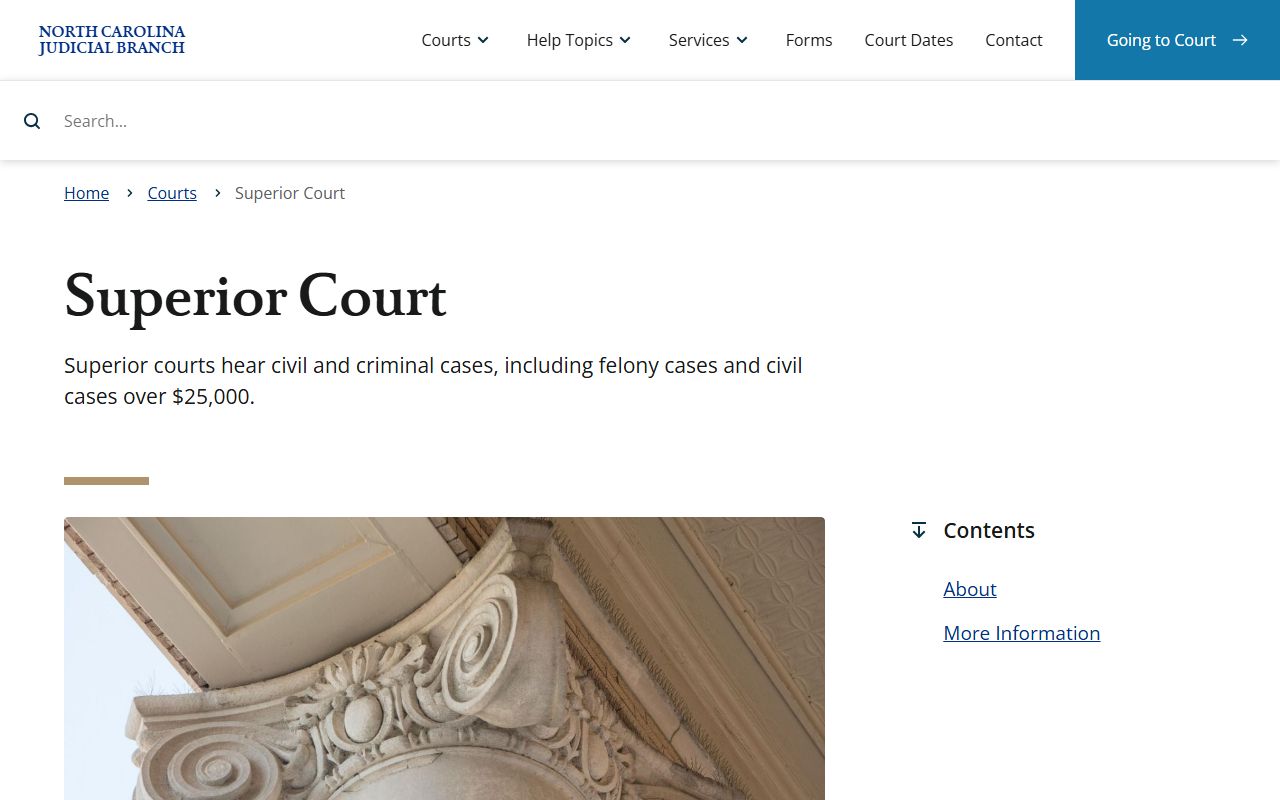
Superior Court records can still be searched through the statewide court tools and the Clerk of Superior Court in Burke County.
The North Carolina District Court overview covers the division where many Burke traffic, misdemeanor, juvenile, domestic, magistrate, and lower-dollar civil matters begin.
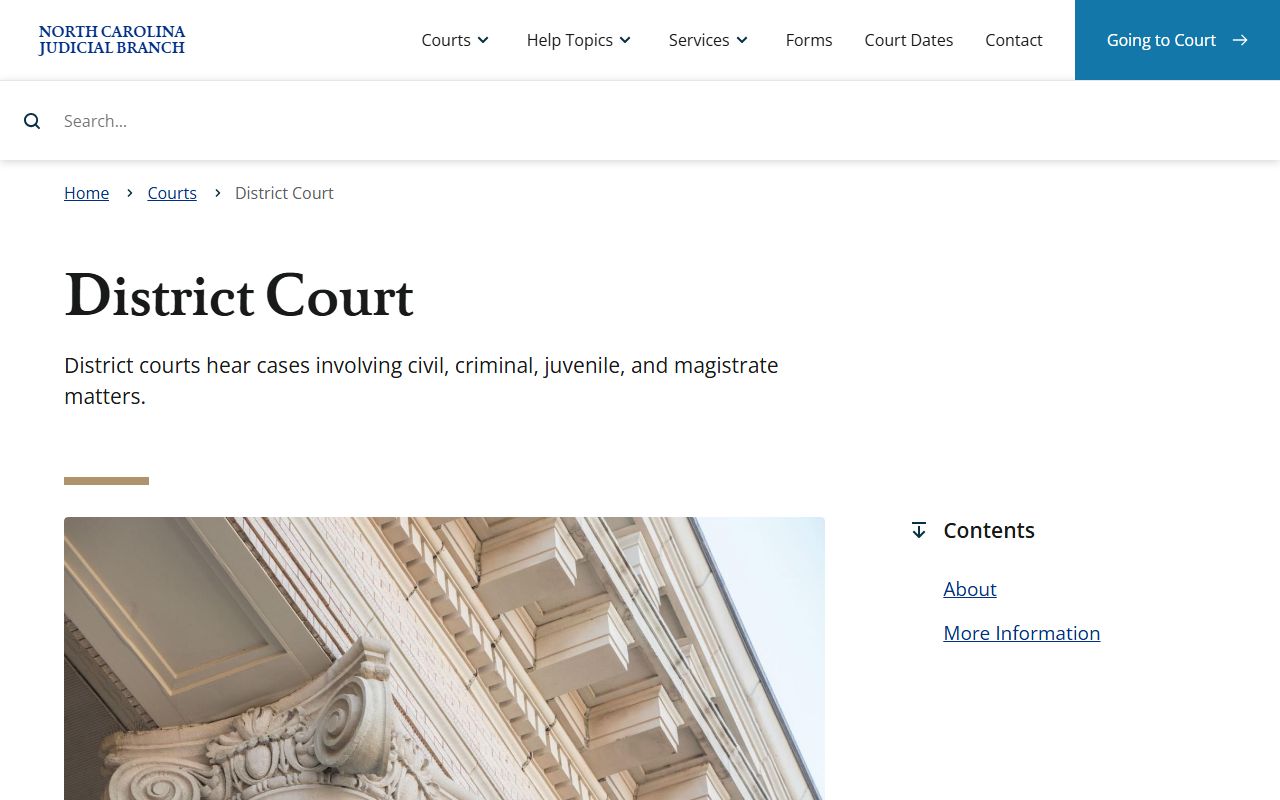
District Court records are often the first place to look for citations, misdemeanors, infractions, domestic matters, and many hearing dates.
The North Carolina Court of Appeals page explains the intermediate appellate court's role.
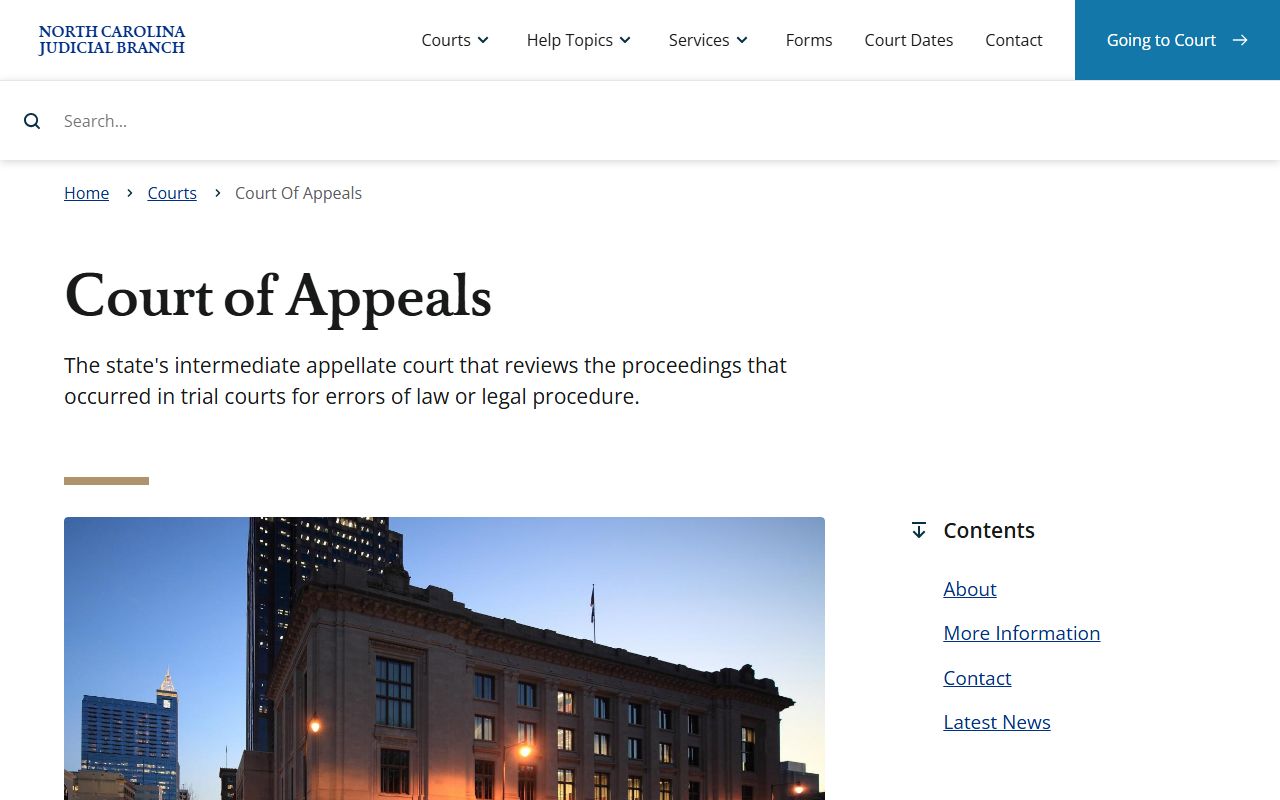
Appellate records should be read with the trial court file because appeal entries often refer back to trial filings, orders, and transcripts.
Burke County Court History
Burke County has both an active modern courthouse on South Green Street and a historic courthouse landmark near downtown Morganton's older courthouse square. The active records counter is the modern courthouse, not the historic building. The Register of Deeds historical material adds useful context for older legal and genealogy searches: marriage bonds existed before modern marriage licenses, and some older birth, death, marriage, cohabitation, and will research may require archives or clerk records rather than current online searches.
North Carolina's eCourts rollout is a major recent change. By October 2025, all counties were expected to have online access to court records and services through eCourts. For Burke County Court users in 2026, that means the Portal is a real first stop, but the clerk's office remains important for certified copies, older paper files, background checks, non-digitized records, and access questions.
Burke County Court Records FAQ
Can Burke County Court records be searched online?
Yes. Public case information is searched through the North Carolina eCourts Portal, using Smart Search, Search Hearings, NC Judgment Search, and payment tools where eligible. Some records, older files, certified copies, and restricted documents still require the Clerk of Superior Court or courthouse public terminals.
Where are certified Burke County Court copies requested?
Certified court copies route through the Clerk of Superior Court in the county where the case is located. For Burke County, use the courthouse clerk contact at (828) 433-3200 and confirm the copy process and fee before mailing or visiting.
Is the Burke County Most Wanted page a full warrant search?
No. The official Most Wanted page is a selected list of people with outstanding warrants who have not been located. For warrant-related case status, use sheriff contacts, eCourts, the clerk, counsel, and magistrate/court channels.
Who keeps Burke County marriage records?
The Burke County Register of Deeds handles marriage licenses and certified marriage copies. Divorce judgments are court records through the Clerk of Superior Court, while NC Vital Records can issue divorce certificates for eligible statewide records.